Xi Jinping in Washington: The Summit That Both Countries Needed
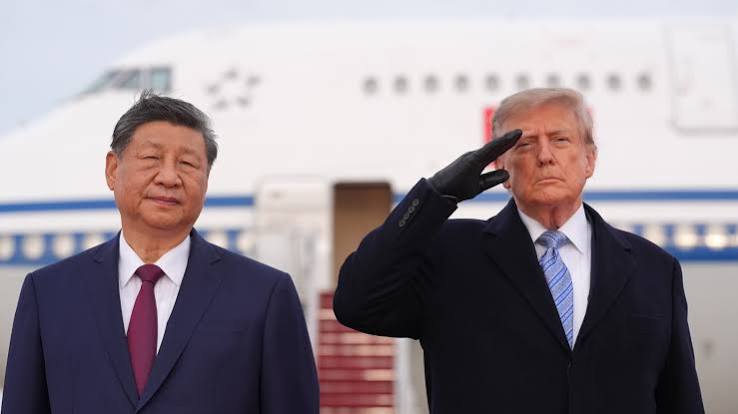
Chinese President Xi Jinping arrived at Joint Base Andrews on September 23, 2026, to begin the first Chinese state visit to the United States in over a decade. President Donald Trump and First Lady Melania Trump met him on the tarmac - an honour Trump reserved for Xi that protocol reserves for very few foreign leaders. Two B-1 Lancer supersonic bombers flew overhead as Xi and his wife, Peng Liyuan, descended the steps of the Air China 747.
Quick Answer: What came out of the Trump-Xi Washington summit in September 2026? The US and China agreed to extend their "Busan" trade truce by two months, pushing the expiry from November 2026 to January 10, 2027. Talks covered trade, Iran, Taiwan and artificial intelligence.

The Trade Truce Extension: What Is the Busan Agreement?
The "Busan agreement" - named for the South Korean city where it was negotiated in October 2025 - had established a temporary tariff truce between the US and China. US tariffs on Chinese goods, which had reached 145% at their peak during the earlier trade war, were pulled back to allow negotiations to proceed. The arrangement was set to expire in November 2026.
US Treasury Secretary Scott Bessent announced on September 23, before Xi had even sat down for formal talks, that both countries had agreed to extend the truce until January 10, 2027. The extension buys time for negotiators on both sides to work toward a more durable deal without the immediate pressure of an expiry deadline pushing both economies toward another tariff escalation.
The State Dinner: Tech Meets Diplomacy
Thursday's state dinner became a notable event in its own right. The guest list, Trump confirmed, included figures from the technology and banking sectors. Amazon's Jeff Bezos and Meta's Mark Zuckerberg were among those present, according to multiple reports. First Lady Melania Trump said the decor drew on "the color red's longstanding cultural significance throughout Chinese history."
Anthropic's CEO Dario Amodei was notably absent from the state dinner, a detail that attracted coverage given Anthropic's growing prominence as an AI company and the centrality of AI to US-China relations. Amodei was subsequently reported to be scheduled for a separate dinner with Trump, suggesting the absence was logistical rather than political.
The Agenda: Iran, Taiwan, AI
Beyond trade, the summit covered three issues that define the tension between Washington and Beijing.
On Iran, Trump wants China to use its economic influence with Tehran to reduce Iran's military posture in the Middle East, where US security alerts were at a high point the same week as the summit. China buys a significant portion of Iranian oil exports, giving Beijing leverage that Washington has repeatedly asked it to exercise more forcefully.
On Taiwan, Xi pushed for a halt to US arms sales to the island. This is a standing Chinese demand that no US administration has accepted, and Trump was not expected to break that pattern. The demand is included in every significant US-China meeting as a matter of form, with both sides understanding the likely outcome.
On artificial intelligence, the talks addressed calls for mutual safeguards as both countries race to develop advanced AI systems. The US has imposed export restrictions on advanced semiconductors to limit China's AI development capacity; China views these restrictions as an act of economic coercion. Finding any common ground on AI governance at this summit was always unlikely, but raising it keeps a channel for future discussion open.
Trump's Framing
Trump described his relationship with Xi as a "truly great friendship" built on mutual respect. This is a consistent element of Trump's diplomatic approach - he uses personal relationship language to frame what are structurally competitive interactions. The framing matters less than the outcomes, and the central outcome here - the trade truce extension - at least ensures that the economic relationship does not deteriorate further in the near term.
Key Takeaways
- Xi Jinping visited Washington September 23-25, 2026, for the first Chinese state visit to the US in over a decade.
- The US-China "Busan" trade truce was extended from November 2026 to January 10, 2027.
- Topics covered: Iran, Taiwan, artificial intelligence safeguards and trade.
- State dinner guests included Jeff Bezos and Mark Zuckerberg.
- Anthropic CEO Dario Amodei was absent from the dinner but later scheduled for a separate meeting with Trump.
Frequently Asked Questions
What is the US-China Busan trade truce?
The Busan agreement, reached in October 2025, reduced US tariffs on Chinese goods and established a temporary ceasefire in the trade war between the two countries. The agreement was due to expire in November 2026 and was extended to January 10, 2027, at the September summit.
Did Trump and Xi reach a permanent trade deal in September 2026?
No. The two-month extension of the trade truce buys time for negotiations but does not represent a final agreement. Both sides are working toward a broader deal, but the details remain unresolved.
Why was the Trump-Xi summit significant for India?
India monitors US-China relations closely. The trade truce extension and the AI discussions have direct implications for global technology supply chains and for the geopolitical alignment of major powers, both of which affect India's strategic position and economic planning.
Conclusion
The September 2026 Washington summit did not resolve the structural tensions between the US and China. It was not designed to. What it did was extend a fragile peace by two months and demonstrate that both sides prefer managed competition to open confrontation. For global markets and for the countries caught between these two economies - India prominent among them - that distinction matters a great deal.