A Death at a Plague Research Facility Has Triggered Quarantine in Siberia
Russian health authorities placed nearly 200 people under quarantine after a 28-year-old worker at an anti-plague research institute in Siberia died of suspected bubonic plague. A suspected plague case in Siberia prompted quarantine measures after a 28-year-old worker at an anti-plague research institute died. The incident is being investigated by federal health authorities, with particular attention to how a researcher at a facility specifically designed to study and contain plague pathogens came to be infected.
Quick Answer: What is the Russia plague scare in October 2026? A 28-year-old researcher at an anti-plague institute in Siberia's Altai region died of suspected bubonic plague, prompting quarantine of nearly 200 contacts. The case is being investigated but health authorities say the risk of wider spread is low given prompt containment.

What Is Known About the Case
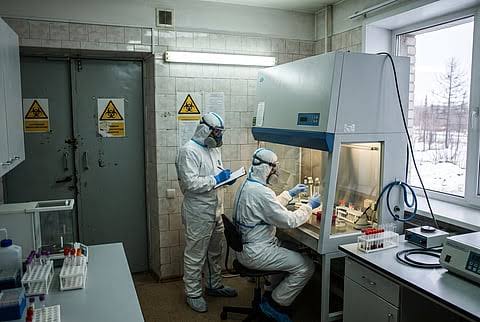
The deceased was a 28-year-old male employee at an anti-plague research institute in Russia's Altai region, a part of Siberia where Yersinia pestis - the bacterium responsible for bubonic plague - is known to be endemic among wild rodent populations. Anti-plague institutes in Russia are research and public health facilities specifically tasked with monitoring, studying and countering plague and other dangerous pathogens. They are among the more biosecure working environments in the Russian health system.
The circumstances of how the researcher was infected have not been publicly confirmed. Possibilities under investigation include a laboratory exposure, an infection contracted outside the facility during field research, or contact with wild rodents in the Altai environment. Bubonic plague is transmitted primarily through the bite of infected fleas that have fed on infected rodents; direct person-to-person transmission is uncommon with the bubonic form.
The Quarantine Measures
Russian federal health authorities acted quickly. Contacts of the deceased at the institute and in his immediate social circle were quarantined - a standard public health response when a confirmed or suspected case of a highly dangerous pathogen is identified. The quarantine covers roughly 200 individuals, with monitoring for fever, swollen lymph nodes and other plague symptoms. Treatment with antibiotics is highly effective when plague is caught early; modern bubonic plague has a very low fatality rate with prompt treatment.
How Dangerous Is This?
Plague outbreaks in Siberia and Central Asia are not unusual historical events - the region has been a natural reservoir for Yersinia pestis for centuries. Russia reports sporadic cases most years, and the anti-plague institute network exists precisely to monitor and contain these incidents. What makes this case notable is its location inside a research facility and the age of the victim. An outbreak into the general population from a contained research facility infection is considered unlikely given the quarantine response, but it has not been ruled out.
The World Health Organisation has been notified, as required under International Health Regulations for confirmed or suspected cases of diseases with pandemic potential.
Historical Context
The Altai region sits at the boundary of several ecosystems where Yersinia pestis has circulated in wild animal populations for centuries. Mongolia, Kazakhstan and parts of Siberia all fall within what epidemiologists call the Central Asian natural focus of plague. Cases in humans from this region typically involve hunters, herders or field researchers who come into contact with infected animals or their fleas. A laboratory exposure at an anti-plague institute adds an institutional dimension that makes this case more notable than a field infection would be.
Key Takeaways
- A 28-year-old researcher at an anti-plague institute in Siberia's Altai region died of suspected bubonic plague in early October 2026.
- Nearly 200 contacts have been placed under quarantine.
- The mode of infection is under investigation - laboratory exposure, field contact or other causes are all being examined.
- Bubonic plague is treatable with antibiotics. Person-to-person spread of the bubonic form is uncommon.
- The WHO has been notified. Risk of wider spread is assessed as low given containment measures.
Frequently Asked Questions
Is bubonic plague still dangerous in 2026?
Bubonic plague can be fatal if untreated. With prompt antibiotic treatment, it has a very low mortality rate in modern medical settings. It is a very different proposition from the pre-antibiotic pandemic era. WHO reports dozens of cases globally each year, primarily from Central Asia, parts of Africa and the Americas.
Can bubonic plague spread from person to person?
The bubonic form - which causes swollen lymph nodes - has limited person-to-person transmission. The pneumonic form, which affects the lungs, is transmitted through respiratory droplets and is far more contagious. This case is suspected bubonic plague. No pneumonic cases have been reported.
Where does plague still occur naturally?
Central Asia and Siberia, sub-Saharan Africa, parts of the Americas (including the US Southwest), and some regions of Central Africa all have established natural reservoirs for Yersinia pestis in rodent populations. Russia's anti-plague institute network monitors these reservoirs.
Conclusion
This is a serious case that warrants careful monitoring. It is not, based on current information, a situation that requires panic. Russia's anti-plague network is experienced and well-resourced, the quarantine was prompt, and bubonic plague is not a disease that spreads efficiently between people. The investigation into how a researcher at a facility designed to prevent exactly this outcome became infected is the question that matters most for biosafety practitioners and public health officials watching this case.