Introduction
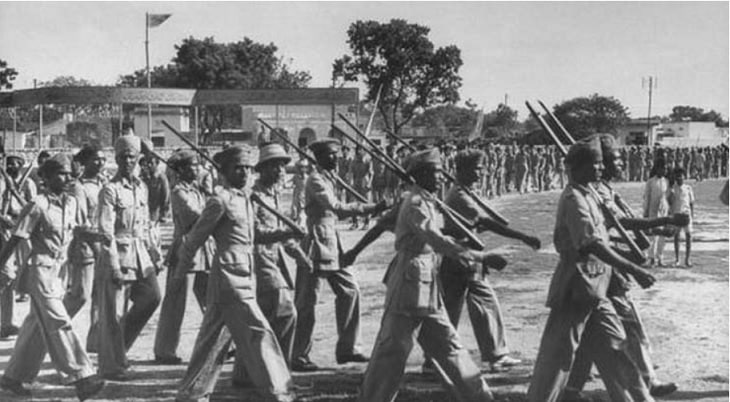
On September 18, 1948 — 78 years ago today — Operation Polo formally concluded after the Indian Army accepted the surrender of the Nizam of Hyderabad's forces. The five-day military operation brought India's largest princely state into the Union, completing a process of national integration that had been stalled by the Nizam's refusal to accede and his attempt to hold Hyderabad as an independent nation.
What Was Operation Polo
Operation Polo, codenamed as a police action by the Indian government, was a military campaign launched on September 13, 1948, under the command of Major General Jayanto Nath Chaudhuri. The operation took its name from the fact that Hyderabad had more polo grounds per square kilometre than any other territory. India's forces moved in five days after the Nizam's government, backed by an irregular militia called the Razakars, continued to resist accession despite months of diplomatic pressure.
Operation Polo at a Glance
| Detail | Information |
|---|---|
| Dates | September 13 to 18, 1948 |
| Indian commander | Major General J. N. Chaudhuri |
| Architect | Sardar Vallabhbhai Patel, Home Minister |
| Result | Surrender of Hyderabad's forces; accession to India |
| Duration | Five days |
The Background
When British paramountcy over the princely states lapsed at Indian independence in August 1947, each princely state's ruler was expected to accede to either India or Pakistan. The vast majority did so. Hyderabad, the largest, wealthiest and most populous of the princely states, was an exception. Mir Osman Ali Khan, the Nizam, sought independent status, arguing that Hyderabad's history and size entitled it to a different arrangement than smaller states had accepted.
Sardar Vallabhbhai Patel, then Home Minister and the man most directly responsible for integrating the princely states, spent more than a year attempting to negotiate an accession. When diplomacy failed and the Razakar militia's violence against civilians escalated, the Indian government authorised the military operation. The five-day campaign ended with the Nizam's surrender and his subsequent appointment as Rajpramukh, or governor, of the newly integrated Hyderabad State.
Why Hyderabad Was Different From Other Princely States
- Population of approximately 17 million, larger than many independent nations at the time
- The Nizam held the title of the world's richest man at various points in the 1940s
- Hyderabad was geographically surrounded by Indian territory, making independence logistically untenable
- The Razakar militia's activities had created significant communal tension within the state
- The Nizam had separately approached the United Nations seeking international recognition as an independent state
Its Legacy in Modern India
Hyderabad's integration had immediate and lasting consequences. The former princely state was eventually reorganised along linguistic lines in 1956 into what became Andhra Pradesh, with the city of Hyderabad serving as its capital. Following the creation of Telangana in 2014, Hyderabad became the shared capital of both states during a ten-year transitional period. Today it stands as one of India's largest metropolitan areas and a major technology hub.
Patel's Role and Its Historical Assessment
Sardar Patel's handling of the princely states integration, often called India's Bismarckian moment by historians, is credited with ensuring that the new nation did not fragment into dozens of competing sovereignties. Operation Polo was the most dramatic single episode of that integration process, and its swift conclusion within five days is typically cited as evidence that the Nizam's military strength had been considerably less formidable than his diplomatic posturing suggested.
Expert Insight
Historians of the period note that the speed of Hyderabad's integration also reflected a carefully managed information environment, with the Indian government choosing to describe the operation as a police action rather than a war partly to manage international reaction at a time when India had only recently become independent and was still establishing its international standing.
Key Takeaways
- Operation Polo concluded on September 18, 1948, 78 years ago today.
- The five-day campaign brought Hyderabad, India's largest princely state, into the Union.
- It was authorised by Sardar Patel and commanded by Major General J. N. Chaudhuri.
- The Nizam was subsequently appointed Rajpramukh, or governor, of Hyderabad State.
- Modern Hyderabad is divided between Telangana and Andhra Pradesh after the 2014 state bifurcation.
FAQ
When did Operation Polo take place?
From September 13 to 18, 1948, concluding 78 years ago today with the surrender of Hyderabad's forces.
Who commanded the Indian forces?
Major General Jayanto Nath Chaudhuri commanded the Indian side; the operation was politically directed by Sardar Vallabhbhai Patel as Home Minister.
What happened to the Nizam after the integration?
Mir Osman Ali Khan was appointed Rajpramukh, or constitutional governor, of the newly integrated Hyderabad State before it was reorganised along linguistic lines in 1956.
Conclusion
Operation Polo is one of those events that shaped modern India's map without receiving the prominence in public memory it arguably deserves. On its 78th anniversary, it is worth recalling that the integration of 565 princely states into a single republic was neither inevitable nor automatic, and that Hyderabad's case was the one where that outcome was most in doubt.