
Indian Markets Navigate a Tough September
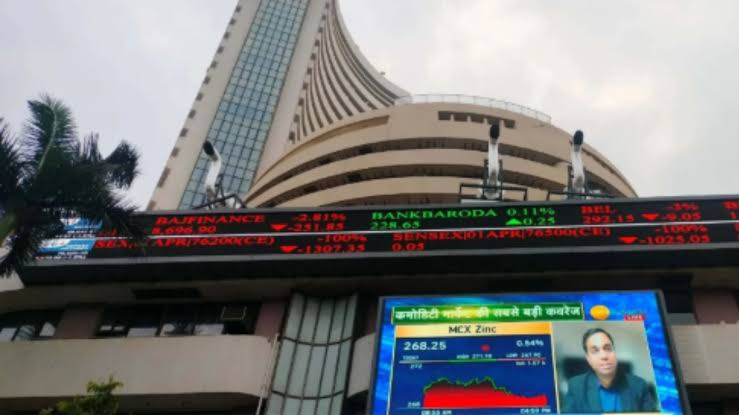
Indian equity markets have had a challenging run through September 2026. The BSE Sensex fell to approximately 74,315 points on September 17 — down roughly 3.78% over the past month and more than 10% compared to the same period last year — hovering near its lowest level since June. The Nifty 50 closed at 23,270.60 on September 17, barely holding above its recent support zone.
The pattern is familiar: foreign institutional investors (FIIs) selling, oil prices staying elevated despite some recent moderation, and a broader caution among domestic investors who are watching both global macroeconomic signals and India-specific developments.

The FII Pressure: How Much Have They Sold?
Foreign institutional investors sold Indian equities worth ₹3,208.76 crore on September 17 alone. Domestic institutional investors (DIIs) partially offset this, buying shares worth ₹3,617.75 crore on the same day — preventing a sharper fall but not enough to turn the tide meaningfully.
This FII-DII tug-of-war has defined Indian markets in 2026. FIIs have been reducing exposure to emerging markets including India as US interest rates remain elevated and the dollar stays strong, making dollar-denominated assets relatively more attractive.
Sector-by-Sector Picture
| Sector | Trend (Sep 17-18) |
|---|---|
| Banking (HDFC Bank, ICICI Bank) | Under pressure — HDFC Bank -1.3%, ICICI Bank -1% |
| Metal | Gaining — Nifty Metal Index +1.51% on Sep 18 |
| Media | Gaining — Nifty Media +1.57% |
| Tata Group stocks (TCS, Tata Motors PV) | Under pressure — declines of 2.5% to 7% |
| Telecom (Bharti Airtel) | Mild pressure — -0.5% |
What Is Driving the Selling?
Several factors are converging to keep Indian markets under pressure:
- Elevated crude oil prices: India imports roughly 85% of its oil needs. When crude stays high, it feeds import bills, widens the current account deficit, and puts pressure on the rupee — all negatives for equity markets.
- US Federal Reserve stance: The Fed's latest move and hawkish commentary have dampened risk appetite globally, with emerging markets bearing the brunt of capital outflows.
- IPO market absorption: Strong activity in India's primary market (IPO space) is absorbing liquidity that might otherwise flow into secondary market stocks.
- Geopolitical tensions: Middle East tensions, the Greenland US-Denmark security deal, and broader global uncertainty are keeping risk premiums elevated.
Bright Spots: Where Markets Found Support
Not all is gloomy. September 18 saw the market open higher as easing crude oil prices provided some relief. Early session breadth was positive, with 15 of 16 sectors trading higher at the open. Small-cap and mid-cap indices gained around 0.2%, suggesting that bottom-up stock picking is finding opportunities even in a broadly pressured market.
Bargain buying is also a visible trend — the recent correction has brought several quality large-cap stocks to levels that long-term domestic investors see as attractive entry points.
What Should Investors Watch Next?
- Crude oil trajectory: Any sustained fall in Brent crude would significantly relieve pressure on Indian markets.
- RBI policy: The Reserve Bank of India's next monetary policy meeting will be closely watched for signals on interest rates and liquidity.
- FII flows: A reversal in FII selling — particularly from US and European funds — would be the single biggest positive catalyst.
- Corporate earnings: Q2 FY27 earnings season is around the corner. Strong results from banking and IT majors could shift sentiment meaningfully.
Key Takeaways
- BSE Sensex near 74,315 — down 10.48% year-on-year and near 52-week lows.
- FIIs sold ₹3,208 crore on September 17; DIIs bought ₹3,617 crore, partially offsetting outflows.
- Banks, Tata Group stocks, and telecom under pressure; metals and media finding buyers.
- Crude oil prices, Fed stance, and geopolitical tension are the main headwinds.
- Bargain buying is visible; bottom-up investors seeing value at current levels.
Frequently Asked Questions
Why is the Indian stock market falling in September 2026?
The fall is driven primarily by sustained FII selling, elevated crude oil prices, a hawkish US Federal Reserve, and global geopolitical uncertainty — all of which are reducing risk appetite for emerging market equities.
Is this a good time to buy Indian stocks?
Market timing is always uncertain. Long-term investors with a 3-5 year horizon may find current levels attractive for quality stocks that have corrected sharply. Consult your financial advisor before making investment decisions.
What is the Sensex level today?
As of September 17, 2026, the BSE Sensex closed at approximately 74,315 points. Markets are closed on Saturday; Monday's opening will reflect weekend global developments.
Conclusion
Indian markets are in a period of adjustment — a correction from elevated valuations toward levels that better reflect the global risk environment. The fundamentals of the Indian economy remain broadly intact, but until FII selling moderates and crude oil eases, near-term market direction is likely to remain choppy. Patience and selectivity are the watchwords for investors navigating this period.