Introduction
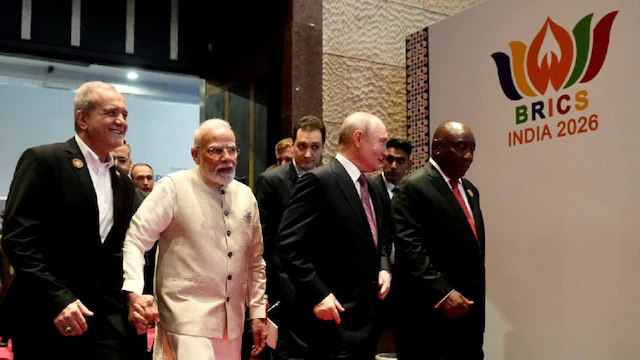
New Delhi woke up this weekend to convoy routes, police barricades and a skyline of hoardings bearing a single message: BRICS has arrived. The 18th BRICS Summit opened at Bharat Mandapam on Saturday, September 12, 2026, pulling together leaders from eleven nations at a moment when the bloc's founding promise of a fairer global order is being tested harder than at any point since its creation. Prime Minister Narendra Modi is hosting Russian President Vladimir Putin, Chinese President Xi Jinping, Iranian President Masoud Pezeshkian and counterparts from Brazil, South Africa, the UAE and other member states, with Saudi Arabia attending as an invited participant.
For a city used to hosting global summits, this one carries an unusually heavy diplomatic weight. Wars in Ukraine and the Middle East, a tense standoff between Washington and Beijing, and India's own balancing act between old allies and new partners have combined to make this year's gathering less ceremonial and more consequential than most of its predecessors.
Why This Summit Is Different
BRICS was built as a loose grouping of large emerging economies looking for more say in institutions long dominated by the West. Over the past two years, its membership has expanded well beyond the original five, and that growth has made consensus harder to reach, not easier. Iran and the UAE bring Gulf energy politics into the room. Ethiopia and other newer entrants add African representation but also more competing priorities.
A Bloc Pulled in Several Directions
- Russia wants explicit backing on Ukraine and sanctions relief messaging.
- China is using the summit to project stability with India after years of border tension.
- Iran is looking for diplomatic cover amid ongoing regional conflict.
- India is trying to keep the bloc pragmatic rather than openly anti-Western, given its own deepening ties with Washington and Europe.
Foreign policy analysts describe BRICS less as an ideological alliance and more as what one regional expert called a pragmatic club for limited purposes, focused on development financing, trade facilitation and reform of institutions like the IMF and World Bank rather than a unified anti-US front.
The Xi-Modi Factor
Among the bilateral moments being watched most closely is Xi Jinping's presence in New Delhi, his first visit to India in seven years. Relations between the two Asian giants have been frosty since the deadly 2020 Galwan Valley border clash, though a disengagement agreement reached in 2024 has allowed some direct flights and diplomatic contact to resume. Modi and Xi held talks on the summit sidelines, with border security, trade imbalances and technology cooperation reportedly on the agenda. Neither government has signalled a dramatic breakthrough, but the optics of the two leaders meeting on Indian soil are themselves being read as a signal that both capitals want to manage tension rather than let it escalate.
Modi also met separately with Putin and Pezeshkian on Friday, ahead of the formal summit sessions, underscoring India's continuing effort to keep channels open with Moscow and Tehran even as it expands defence and technology cooperation with the United States.
Security and Logistics in the Capital
Delhi Police and paramilitary units have deployed heavily around Bharat Mandapam and connecting routes, with traffic advisories in place through the weekend. Metro services have carried special summit branding, and several arterial roads have seen diversions similar to those used during the 2023 G20 summit hosted in the same venue. Local authorities have also used the week to continue drives against unauthorised construction in parts of the city, separate from the summit itself but adding to the sense of a capital in overdrive.
What's On the Formal Agenda
| Theme | Key Discussion Points |
|---|---|
| Trade and Investment | Local currency settlement, new development bank financing, supply chain diversification |
| Global Conflicts | Ukraine war, Middle East de-escalation, energy security |
| Technology | AI cooperation frameworks, digital public infrastructure sharing |
| Institutional Reform | UN Security Council expansion, IMF quota reform |
Expert Insight
Regional foreign-policy commentators tracking the summit note that India's real objective is narrower than headlines suggest. Rather than turning BRICS into a counterweight to the US, New Delhi appears focused on using the platform to advance a non-Western worldview on development financing without closing the door on Washington. That balancing act, they argue, is precisely why India continues to court both Russia and the United States simultaneously, even when it draws criticism from either side.
Key Takeaways
- The 18th BRICS Summit is being held in New Delhi with eleven nations represented, including Saudi Arabia as an invited guest.
- Xi Jinping's visit is his first to India in seven years, seen as a signal of cautious thaw after the 2020 border clash.
- Modi held separate bilateral talks with Putin and Pezeshkian ahead of the main summit.
- Security has been significantly stepped up across New Delhi, with traffic diversions and heavy police deployment.
- Analysts caution against reading BRICS as a unified anti-US bloc; priorities among members diverge sharply.
FAQ
Which countries are attending the 2026 BRICS Summit?
Leaders and senior representatives from India, China, Russia, Brazil, South Africa, the UAE, Iran and other expanded BRICS members are attending, with Saudi Arabia participating as an invited member.
Why is Xi Jinping's visit significant?
It marks his first trip to India in seven years, following the 2020 Galwan Valley border clash and a subsequent disengagement agreement reached in 2024.
Is BRICS meant to counter the United States?
Analysts say the bloc functions more as a platform for trade and development cooperation among emerging economies rather than a coordinated anti-Western alliance, given how differently members like India and Russia approach relations with Washington.
Conclusion
Whatever communique emerges from Bharat Mandapam this weekend, the more interesting story may be the choreography around it: two leaders managing a cautious reset, a host trying to keep a fractious bloc pointed toward shared economic goals, and a capital city absorbing the logistics of hosting the world once again. The real test of this summit will not be what is said in New Delhi, but what changes, if anything, once the leaders fly home.