
Introduction
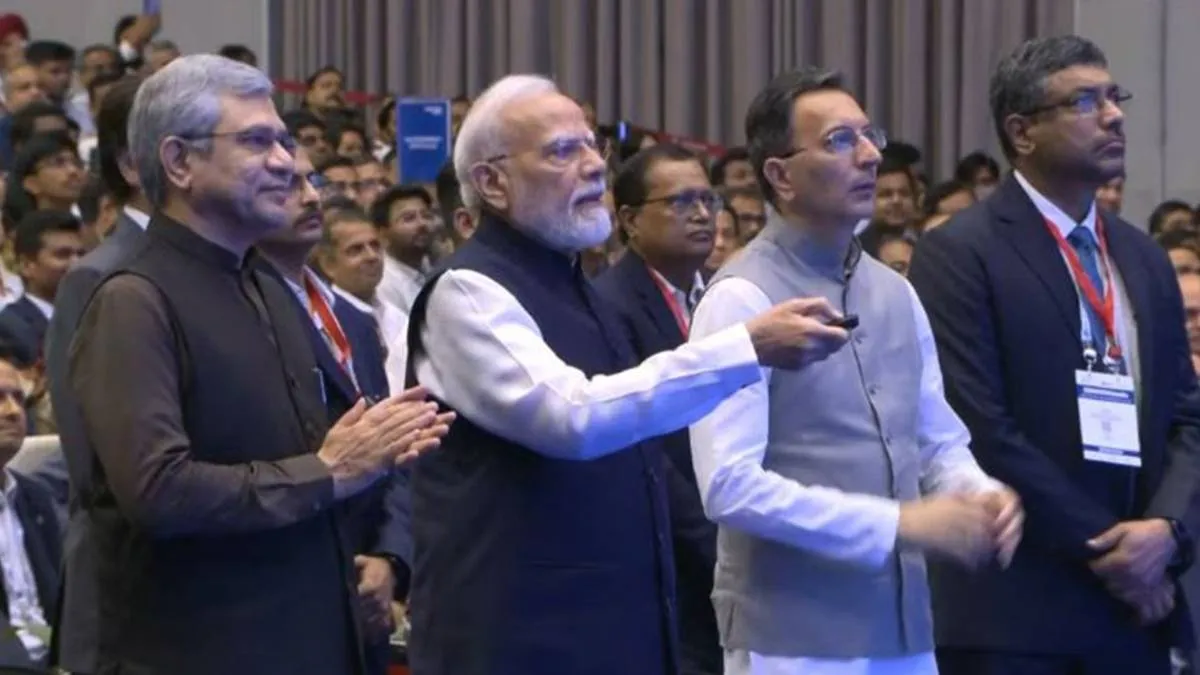
Prime Minister Narendra Modi used his address at SEMICON India 2026 on September 17 to announce that the government is increasing the outlay for the second phase of the India Semiconductor Mission, Semicon 2.0, to $13.5 billion. Modi said the country's semiconductor ecosystem was expanding rapidly, while the government is increasing the outlay for the second phase of the India Semiconductor Mission to $13.5 billion.
What Modi Said
Speaking to an audience of over 600 exhibitors and representatives from 52 countries, Modi positioned India as a "trusted destination" for semiconductor manufacturing, framing the increased outlay as a commitment to sustaining momentum built under the first phase of the programme. He also highlighted that three of the 12 projects approved under Semicon 1.0 have commenced commercial production, presenting this as proof that policy is converting into operational output.
Key Announcement
| Detail | Information |
|---|---|
| Semicon 2.0 outlay (updated) | $13.5 billion |
| Previous Cabinet-approved figure | Rs 1,27,500 crore (~$15 billion at earlier exchange rates) |
| Projects in commercial production | 3 of 12 approved under Semicon 1.0 |
| Event | SEMICON India 2026, Yashobhoomi, New Delhi |
India's Trade Stance on US Tariffs
The SEMICON address also came against the backdrop of fresh trade pressures. India has said it remains committed to protecting its trade and economic interests amid the latest developments involving US tariffs and sanctions. The Ministry of External Affairs said India's energy security and national interests would remain important considerations.
Industry Commitments at the Event
Alongside Modi's policy announcement, major equipment makers announced large-scale India investments. Lam Research committed approximately Rs 10,000 crore to build its first silicon component manufacturing facility in the country, while Applied Materials announced a $5 billion decade-long India Vision 2035, covering a 140-acre research park, tenfold supply-chain expansion and doubled R&D headcount by 2035. Together, the two commitments represent a combined $6.2 billion-plus of industry capital directed at India's semiconductor supply chain.
Corporate Commitments at SEMICON India 2026
- Lam Research: ~Rs 10,000 crore for first India silicon manufacturing facility
- Applied Materials: $5 billion over 10 years under India Vision 2035
- Lam's Semiverse: Training programme targeting 60,000 Indian students across 99+ universities
Why the Outlay Figure Matters
The $13.5 billion figure signals continued government commitment to a programme that is beginning to show real-world output in the form of commercial production at three approved facilities. Scaling the outlay alongside confirmed manufacturing commitments from global equipment majors makes the second phase significantly more resource-backed than its predecessor at launch.
Expert Insight
Semiconductor industry analysts note that equipment supplier investment, specifically Lam Research and Applied Materials moving beyond research toward manufacturing in India, is a meaningfully different signal than financial sector or software investment would be, since equipment makers only commit to local manufacturing when they have confidence in sustained long-term demand from domestic fabrication activity.
Key Takeaways
- Modi announced the Semicon 2.0 outlay is being raised to $13.5 billion.
- Three of 12 Semicon 1.0 projects are now in commercial production.
- Lam Research and Applied Materials announced combined investments exceeding $6 billion.
- India's MEA reaffirmed commitment to protecting trade and energy interests amid US tariff pressure.
FAQ
How much is India investing in semiconductors under Semicon 2.0?
The government has increased the outlay to $13.5 billion, as announced by PM Modi at SEMICON India 2026.
How many chip projects are in production?
Three of the 12 projects approved under Semicon 1.0 have commenced commercial production.
What did Lam Research commit to India?
Approximately Rs 10,000 crore to build its first silicon component manufacturing facility in India.
Conclusion
A larger financial commitment, early production evidence and industry-led capital announcements give Semicon 2.0 a credibly stronger foundation than most new policy launches. The question, as always, is execution timelines rather than announced figures.