One of the Himalayas' Most Sacred Pilgrimages Nears Its End
In the remote Bharmaur region of Chamba district, Himachal Pradesh, one of the most breathtaking and spiritually significant pilgrimages in the Indian Himalayas is reaching its annual conclusion. The Manimahesh Yatra 2026 — undertaken by thousands of devotees each year to reach the sacred Manimahesh Lake at an altitude of 4,080 metres — is in its concluding phase around Radha Ashtami (September 19, 2026), the traditional culminating date of the pilgrimage.
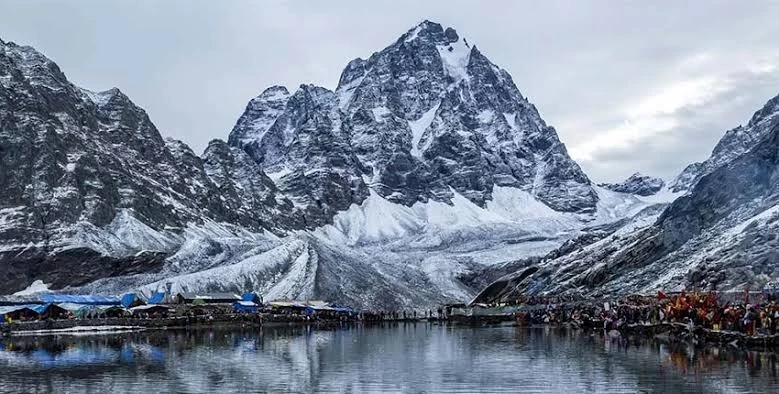
The journey to Manimahesh Lake is considered deeply auspicious in the Shaivite tradition. The lake is believed to be the abode of Lord Shiva, and the snow-capped Manimahesh Peak (6,528 metres) that towers above it is revered as Shiva's throne.
The Sacred Geography of Manimahesh
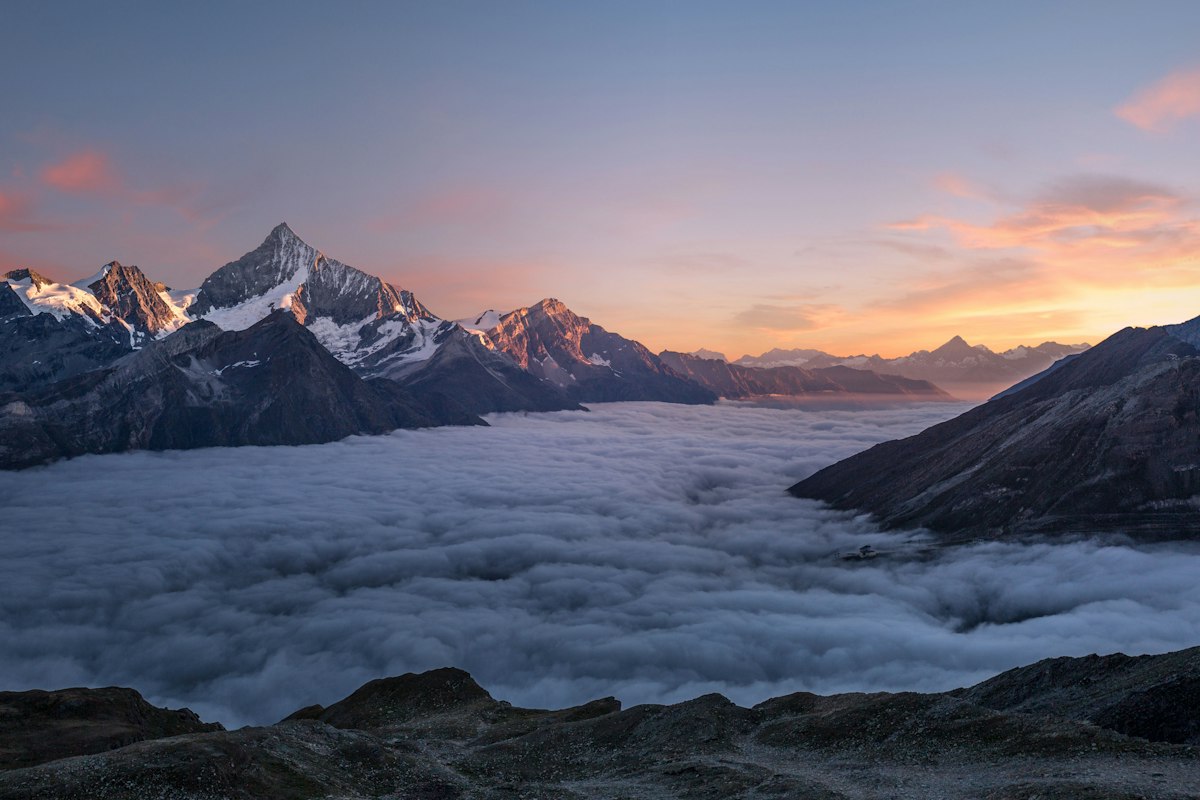
Manimahesh Lake sits in a natural amphitheatre surrounded by high Himalayan peaks in the Pir Panjal range. The lake is fed by glacial meltwater and is perpetually cold — even in late summer, temperatures near the lake hover just above freezing at night. Despite the harsh conditions, the lake draws tens of thousands of pilgrims annually, with some making the journey on foot from as far as 12 kilometres below at the base camp of Hadsar.
The Manimahesh Peak itself is notable for never having been successfully climbed, which local tradition attributes to its sacred nature — it is believed that Lord Shiva does not permit the summit to be reached by mortals.
The Holy Dip: Radha Ashtami and the Culmination of the Yatra
The traditional holy bath at Manimahesh Lake associated with the yatra's culmination takes place around Radha Ashtami — making the Chamba pilgrimage uniquely tied to both Shaivite and Vaishnava sacred calendars. Pilgrims who reach the lake take a dip in its icy waters as an act of supreme devotion, believed to wash away sins and bring spiritual liberation.
The second major bathing date associated with the yatra is Janmashtami, 15 days earlier — meaning the pilgrimage effectively spans the period between the two Krishna-related festivals, bookended by Shaiva devotion at Manimahesh Lake itself.
The Route: How Do Pilgrims Reach Manimahesh Lake?
The most common pilgrim route begins at Hadsar, a village in the Bharmaur sub-division of Chamba district, accessible by road from the town of Bharmaur. From Hadsar, the trek to Manimahesh Lake covers approximately 12 kilometres through forested terrain, river crossings, and increasingly steep alpine meadows — gaining over 1,500 metres in altitude.
The Himachal Pradesh government facilitates the yatra each year with:
- Medical camps at key points along the route.
- Helicopter services for those unable to trek — operated from Bharmour to Gauri Kund, approximately 4 kilometres from the lake.
- Police deployment for crowd management and safety.
- Emergency response teams stationed at intervals.
The Historical and Mythological Significance
Manimahesh has been a pilgrimage site for centuries. According to Hindu tradition, Lord Shiva performed his cosmic dance (Tandava) at Manimahesh after his marriage to Goddess Parvati in the Himalayas. The lake is said to have formed as Shiva's shivalinga — represented by the Manimahesh Peak — was blessed with glacial waters.
The nearby Bharmaur town, once the ancient capital of Chamba kingdom, houses the Chaurasi temple complex — a cluster of 84 ancient temples dedicated to various deities, including the famous Lakshna Devi temple dated to the 7th century CE. Many pilgrims visit Bharmaur's temples before commencing the final ascent to the lake.
Practical Information for Future Pilgrims
| Detail | Information |
|---|---|
| Lake altitude | 4,080 metres (13,385 ft) |
| Nearest base point | Hadsar (road accessible) |
| Trek distance | ~12 km one way from Hadsar |
| Best season | August–September (around Janmashtami and Radha Ashtami) |
| Helicopter service | Bharmour to Gauri Kund (operated by HP Tourism) |
| Nearest airport | Gaggal Airport, Kangra (~155 km) |
Key Takeaways
- Manimahesh Yatra 2026 concludes around Radha Ashtami (September 19, 2026) with the traditional holy dip at Manimahesh Lake.
- The lake sits at 4,080 metres in Chamba district, Himachal Pradesh, below the sacred Manimahesh Peak.
- The pilgrimage is one of Himachal Pradesh's most significant religious events, drawing tens of thousands annually.
- Helicopter services and government medical camps support the yatra each year.
Frequently Asked Questions
How difficult is the Manimahesh Yatra trek?
The trek from Hadsar to Manimahesh Lake is moderately to strenuous difficult — 12 km with significant altitude gain. Pilgrims with cardiac conditions or altitude sensitivity should consult a doctor and consider the helicopter option.
When is the best time to visit Manimahesh Lake?
The official yatra season runs from Janmashtami to Radha Ashtami (typically August–September). Outside this window, the lake is accessible in summer (June–July) but sees less footfall.
Is the Manimahesh Peak ever climbed?
No — Manimahesh Peak (6,528 m) has no confirmed successful summit. Local tradition holds it sacred and considers it Shiva's throne, beyond human ascent.
Conclusion
The Manimahesh Yatra is not just a pilgrimage — it is an encounter with the Himalayas in their most austere, most humbling aspect. Pilgrims who make the trek return not just with stories of sacred waters and mountain vistas, but with something harder to describe: the particular quietness that comes from having walked very far, very high, for a reason that matters. As the 2026 yatra concludes, thousands carry that quietness home with them — until next year calls them back.