Three New Judges Join the Supreme Court of India
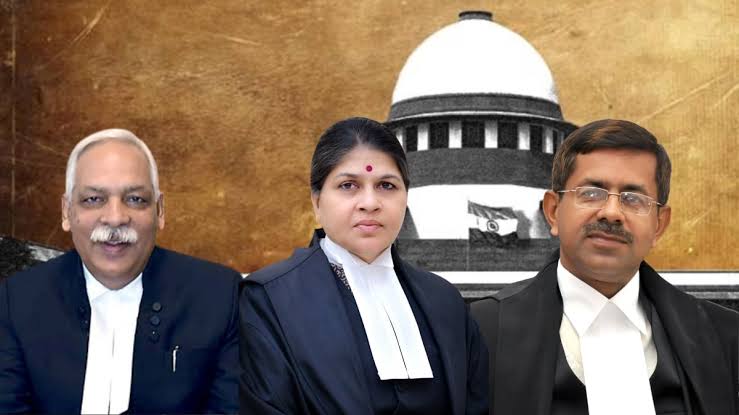
President Droupadi Murmu elevated three High Court judges to the Supreme Court of India on October 5, 2026. Justice Sunita Agarwal, Justice Devendra Kumar Upadhyaya and Justice Aparesh Kumar Singh were elevated as judges of the Supreme Court. The appointments follow the recommendation of the Supreme Court Collegium and address vacancies in a bench that has been operating with several positions unfilled through 2026.
Quick Answer: Who are the new Supreme Court judges appointed in October 2026? Justice Sunita Agarwal, Justice Devendra Kumar Upadhyaya and Justice Aparesh Kumar Singh were elevated to the Supreme Court of India on October 5, 2026, by President Droupadi Murmu.
Justice Sunita Agarwal
Justice Sunita Agarwal comes to the Supreme Court from the Allahabad High Court, where she served as a judge. Her elevation is notable in the context of the Supreme Court's ongoing effort to improve gender representation on the bench - women judges remain significantly underrepresented relative to their proportion of the legal profession. The Supreme Court has had only a handful of women judges in its history, and each appointment carries weight beyond the individual's credentials.
Justice Devendra Kumar Upadhyaya
Justice Devendra Kumar Upadhyaya brings experience from the Bombay High Court, where he served as Chief Justice before his elevation. High Court Chief Justices are often natural candidates for Supreme Court elevation given their administrative experience alongside judicial work. His elevation follows the standard collegium process of identifying senior judges from across the country's High Courts based on seniority, ability and diversity considerations.
Justice Aparesh Kumar Singh
Justice Aparesh Kumar Singh comes from the Jharkhand High Court, where he served as Chief Justice. His elevation brings representation from eastern India's judicial cadre to the Supreme Court bench, which the collegium has been consciously working to ensure reflects India's geographic diversity alongside legal expertise.
The Collegium System: How Appointments Work
India's Supreme Court judges are appointed through the collegium system, where a group of the Supreme Court's senior-most judges recommend appointments to the President. The collegium comprises the Chief Justice of India and the four most senior Associate Justices. The President formally makes the appointment on the collegium's recommendation - it is not an executive decision in the usual sense. The process has been a subject of debate between the judiciary and the executive about transparency and accountability, but the collegium system has remained the operative mechanism for appointments.
Court Strength After These Appointments
The Supreme Court of India has a sanctioned strength of 34 judges including the Chief Justice. With several retirements through 2026 and gaps between retirements and replacements, the bench had been operating below full strength. These three appointments bring the court closer to its sanctioned number, which has implications for the court's capacity to dispose of the large backlog of cases pending at the Supreme Court level.
Key Takeaways
- Three judges elevated to the Supreme Court on October 5, 2026: Justice Sunita Agarwal, Justice Devendra Kumar Upadhyaya and Justice Aparesh Kumar Singh.
- Justice Agarwal comes from Allahabad High Court; Justice Upadhyaya from Bombay High Court (as Chief Justice); Justice Singh from Jharkhand High Court (as Chief Justice).
- The appointments bring the Supreme Court bench closer to its sanctioned strength of 34 judges.
Frequently Asked Questions
How are Supreme Court judges appointed in India?
Through the collegium system. The collegium - comprising the Chief Justice and the four most senior judges of the Supreme Court - recommends names to the President, who formally makes the appointment. The executive's role in the process is constitutionally prescribed but practically limited by the collegium's recommendation authority.
What is the sanctioned strength of the Supreme Court of India?
34 judges, including the Chief Justice of India. The court has frequently operated below this strength due to gaps between retirements and new appointments.
How many women have served as Supreme Court judges in India?
Very few relative to the total number of judges who have served since 1950. Justice Fatima Beevi was the first woman Supreme Court judge in 1989. The representation of women on the Supreme Court bench has been a persistent issue the collegium has been working to address in recent appointment cycles.
Conclusion
Three appointments to the Supreme Court are, in themselves, routine administrative actions. What makes each appointment matter is the cases that the incoming judges will sit on, the benches they join and the perspective they bring to the court. Justice Agarwal's elevation as a woman judge, Justice Upadhyaya's experience as a High Court chief at Bombay, and Justice Singh's background from the eastern bench - each adds something specific. The court's capacity to handle its backlog improves by three judges. That is a practical outcome for the hundreds of thousands of cases waiting for hearing.