
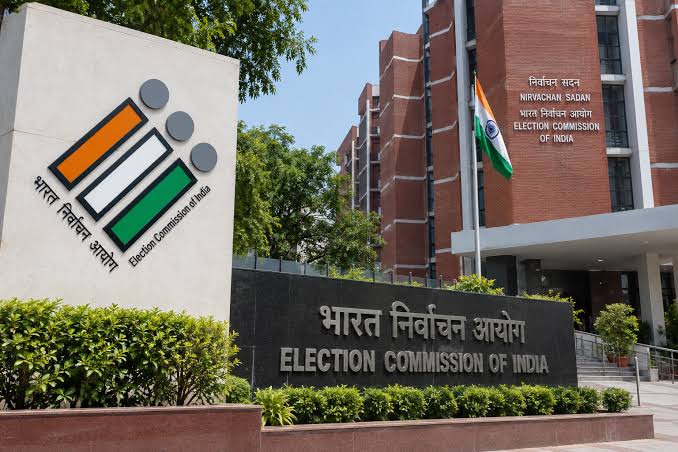
What Is the Election Commission of India?
The Election Commission of India, commonly known as the ECI, is the autonomous constitutional authority responsible for administering every election to the Indian Parliament, state legislative assemblies, and the offices of the President and Vice-President of India. It is not a government department. It derives its power directly from Article 324 of the Constitution of India, which vests in it the superintendence, direction and control of the preparation of electoral rolls and the conduct of all elections to Parliament and to the legislature of every state.
Founded on January 25, 1950 — one day before the Constitution came into force — the ECI has overseen more than seventeen general elections to the Lok Sabha and hundreds of state assembly elections over seven and a half decades, making it one of the oldest and most experienced electoral management bodies in the democratic world.
Constitutional Foundation: Article 324 Explained
Article 324 is the bedrock of the Election Commission's authority. It states that the power of superintendence, direction and control of elections to Parliament, state legislatures and the offices of President and Vice-President of India shall be vested in the Election Commission. The article also empowers the ECI to make decisions independently, without awaiting instructions from the executive.
- Article 324(1): Vests electoral superintendence in the Commission.
- Article 324(2): Authorises the President to determine the number of Election Commissioners beyond the Chief Election Commissioner.
- Article 324(5): Protects the Chief Election Commissioner from removal except through parliamentary impeachment — the same process used for a Supreme Court judge.
This constitutional shield is what makes the ECI genuinely independent: unlike most regulatory bodies, it cannot be disbanded or restructured by a simple government order.
Structure of the Election Commission of India in 2026
The ECI currently functions as a three-member collegial body, a structure it has maintained continuously since October 1, 1993. The three members are:
- Chief Election Commissioner (CEC): Shri Gyanesh Kumar (incumbent, 2026)
- Election Commissioner: Dr. Sukhbir Singh Sandhu
- Election Commissioner: Dr. Vivek Joshi
All three enjoy equal powers, equal status and equal pay. Decisions are taken collectively, with the majority view prevailing. The CEC cannot unilaterally override the other two Commissioners; under Section 18 of the Chief Election Commissioner and Other Election Commissioners Act, 2023, the Commission aims for consensus first, falling back on majority vote when consensus is unavailable.
Historical Timeline of ECI Structure
| Period | Structure |
|---|---|
| 1950 to 1989 | Single-member: Chief Election Commissioner only |
| October 1989 | Expanded to three members for the first time |
| January 1990 | Reverted to single member |
| October 1, 1993 | Permanently restored to three-member structure |
| 2026 | Three members: Gyanesh Kumar, Sandhu, Joshi |
How Are Election Commissioners Appointed?
Until 2023, the appointment process was governed by the Chief Election Commissioner and Other Election Commissioners (Conditions of Service) Act, 1991, which gave the President the formal power to appoint on the advice of the Prime Minister's council of ministers, with convention favouring the senior-most serving Election Commissioner for the CEC's role.
In 2023, Parliament passed the Chief Election Commissioner and Other Election Commissioners (Appointment, Conditions of Service and Term of Office) Act, 2023, which came into force on January 2, 2024. Under the new framework, a three-member Selection Committee recommends appointments to the President. The Committee consists of:
- The Prime Minister (Chairperson)
- A Union Cabinet Minister nominated by the Prime Minister
- The Leader of Opposition in the Lok Sabha (or the leader of the largest opposition party if no formal Leader of Opposition is recognised)
The Chief Justice of India is no longer part of this committee, a change that overturned a Supreme Court direction given in the 2023 Anoop Baranwal vs Union of India judgment, and which remains contested by opposition parties and legal scholars who argue it reduces the independence of the appointment process.
Tenure and Removal
Each Commissioner serves a term of six years or until the age of 65, whichever comes first. The Chief Election Commissioner can only be removed by Parliament through the same impeachment procedure used for a Supreme Court judge, requiring an address from each House of Parliament supported by a special majority. The two Election Commissioners can be removed on the recommendation of the CEC, providing an internal check within the body itself.
Powers and Functions of the ECI
The Election Commission's responsibilities span the entire electoral cycle, from voter registration to the swearing-in of newly elected members. Its powers fall into three broad categories.
1. Advisory, Administrative and Quasi-Judicial Powers
The ECI advises the President and Governors on questions relating to the disqualification of Members of Parliament and state legislators. It has the power to determine whether a political party is entitled to recognition as a national or state party, to allocate election symbols, and to settle disputes over party name and symbol in cases of party splits — a power it has exercised in several high-profile cases over the years.
2. Model Code of Conduct Enforcement
The Model Code of Conduct, or MCC, is a set of guidelines the ECI has developed through practice over decades, covering conduct of political parties, candidates and the government during the election period. Once elections are announced, the MCC comes into force, restricting the ruling party or government from announcing new policy schemes, using state resources for campaigning, or making appointments that could influence voters. The ECI can censure, warn or direct action against violators, though the MCC does not have formal statutory backing — it operates through moral authority and the threat of electoral disqualification under existing laws.
3. Electoral Roll Management
The ECI is responsible for preparing and maintaining accurate electoral rolls. It oversees a network of thousands of Booth Level Officers, or BLOs, who verify voter information at the ground level. The process of Special Intensive Revision, described in detail below, is the most comprehensive exercise the ECI conducts to update rolls.
What Is the Model Code of Conduct?
The Model Code of Conduct is one of the ECI's most distinctive and powerful tools. It comes into effect from the date of election announcement and remains until the process concludes. It prohibits:
- Announcing new government schemes, subsidies or programmes designed to attract votes
- Using government machinery, vehicles or staff for party or campaign work
- Making appointments or transfers of officials in ways that could influence the election outcome
- Hate speech, inflammatory statements and appeals based on caste or religion
- Distributing cash or gifts to voters
Political parties, candidates and their campaign teams are all bound by the MCC, and the ECI monitors compliance through a system of flying squads, expenditure observers and media monitoring cells in every constituency.
Electronic Voting Machines and VVPAT: India's Backbone of Voting
India moved from paper ballots to Electronic Voting Machines, or EVMs, in a phased manner beginning in the 1980s, completing the nationwide transition by 2004. EVMs have been the subject of legal challenge in multiple High Courts and the Supreme Court, all of which have upheld their integrity. In 2013, the ECI introduced Voter Verifiable Paper Audit Trails, or VVPATs, which print a paper slip that the voter can see and verify before it falls into a sealed compartment, adding a physical audit layer to electronic voting.
EVM and VVPAT Key Facts
| Feature | Detail |
|---|---|
| First EVM use | 1982, Kerala (Parur constituency by-election) |
| Nationwide rollout | Completed by 2004 general election |
| VVPAT introduced | 2013, Nagaland by-election pilot |
| VVPAT nationwide | 2019 general election |
| Storage post-election | 45 days for EVMs; VVPAT slips preserved |
ECINET: India's Unified Digital Electoral Platform (2026)
One of the most significant recent developments in Indian electoral administration is the launch of ECINET — a unified digital platform that consolidates more than 40 apps and web services previously offered by the ECI under a single interface. Chief Election Commissioner Gyanesh Kumar launched ECINET at the India International Conference on Democracy and Election Management (IICDEM) in New Delhi in January 2026.
What ECINET Offers
- Voter registration, correction and deletion (Form 6, 6A, 7, 8)
- Voter card download and status tracking
- Electoral roll search by name, EPIC number or address
- Polling station locator
- Election results in real time
- Complaint and grievance submission
- Party and candidate affidavit access
- Nomination filing support for candidates
- Available in all 22 scheduled languages plus English
The platform was described by the CEC as a comprehensive digital gateway connecting citizens, candidates, political parties and election officials, with the goal of making every key election service accessible on one platform rather than requiring voters to navigate multiple separate applications.
Special Intensive Revision (SIR) of Electoral Rolls: 2025-26
The Special Intensive Revision, or SIR, is the most comprehensive exercise the ECI conducts to clean and update voter lists. Unlike routine periodic revisions that rely largely on citizen-initiated applications, the SIR involves Booth Level Officers physically visiting every home in their assigned polling station to verify the existence, eligibility and details of each registered voter.
Scale of the 2025-26 SIR
The ECI conducted SIR Phase 1 covering initial states and then launched Phase 2 in November 2025, covering twelve states and union territories with a combined electorate of approximately 51 crore. The scope and findings were significant:
- Over 50.96 crore enumeration forms distributed to electors — 99.98 percent of the target electorate.
- In Uttar Pradesh, 2.89 crore names, roughly 18.7 percent of the existing roll, were not found in the new draft roll.
- In West Bengal, nearly 91 lakh names were removed, combining earlier deletions with judicial adjudications.
- In Maharashtra, 90 lakh 80 thousand voters' records were subject to door-to-door verification, with a final voter list publication scheduled for October 27, 2026.
ASDD: The Four Categories of Voter Removal
During SIR, BLOs identify and flag entries for deletion under four categories, collectively known as ASDD:
| Letter | Category | Meaning |
|---|---|---|
| A | Absent | Voter not found at registered address despite repeated visits |
| S | Shifted | Voter has moved to another constituency |
| D | Dead | Voter is deceased |
| D | Duplicate | Voter appears more than once in the roll |
Voters whose names are flagged for removal receive notice and can appeal to designated Appellate Tribunals — in West Bengal, 19 such tribunals were set up across 23 districts, each headed by a retired judge. The Supreme Court of India has upheld the ECI's constitutional authority to conduct SIR as part of its mandate to prepare accurate electoral rolls.
Election Commission's 2026 Rules on AI and Digital Content
In a significant policy move reflecting the changed digital landscape, the ECI issued comprehensive orders in March 2026 regulating the use of artificial intelligence and digital media in political campaigning, ahead of assembly elections in Assam, Kerala, Tamil Nadu, West Bengal, Puducherry and several by-elections.
Key AI and Digital Campaign Rules (2026)
- Pre-certification mandatory: All political advertisements across TV, radio, e-papers, public display screens, bulk SMS, voice messages and social media must receive prior approval from the Media Certification and Monitoring Committee (MCMC) before publication.
- AI-generated content labelling: Any synthetically generated or AI-altered content used in campaigning must be clearly labelled as "AI-Generated", "Digitally Enhanced" or "Synthetic Content", along with disclosure of the originating entity.
- Three-hour takedown rule: Social media platforms are directed to act on any misleading or unlawful AI-generated content within three hours of being notified.
- No unlabelled deepfakes: Manipulated images or videos of candidates or public figures that could mislead voters are treated as Model Code violations.
- Social media account disclosure: Candidates must share their authentic social media account details in their nomination affidavit.
- Expenditure reporting: Parties must submit internet and social media campaign expenditure to the ECI within 75 days of election completion.
SVEEP: The ECI's Voter Education Programme
The Systematic Voters' Education and Electoral Participation programme, known as SVEEP, is the ECI's flagship initiative to raise voter awareness, increase turnout and encourage participation among under-represented groups. SVEEP campaigns are run alongside every major election and specifically target first-time voters between the ages of 18 and 21, urban voters who historically show lower turnout than rural areas, women voters, persons with disabilities, the elderly, and migrant workers.
The ECI has partnered with celebrities, schools, colleges, corporate organisations and civil society groups under SVEEP to create electoral awareness content, conduct voter registration drives and make voting more accessible through measures including postal ballots for essential services workers and home voting facilities for elderly and disabled citizens.
ECI's Accessible Elections Project
The Accessible Elections Project is the ECI's dedicated initiative to ensure that every eligible Indian citizen, regardless of physical ability or location, can exercise the right to vote. Measures under the project include:
- Wheelchair ramps and accessible toilet facilities at all polling stations
- Braille-enabled EVMs for visually impaired voters
- Volunteer assistance for elderly and disabled voters at polling stations
- Postal ballot facility for voters aged 85 and above, and for persons with disabilities of 40 percent or more
- Home voting facility for eligible senior and disabled voters in certain states
- Sign language electoral awareness videos
ECI's Global Standing and Recognition
India's Election Commission is widely regarded as a model for electoral administration globally. It is frequently cited by the United Nations Development Programme, International IDEA (Institute for Democracy and Electoral Assistance) and other international organisations as an example of credible, large-scale election management in a diverse democracy. The ECI has provided technical assistance to electoral bodies in several countries and regularly hosts international delegations at its training and research institute.
At the IICDEM 2026 conference in January, delegations from multiple countries including the United Kingdom held bilateral meetings with Chief Election Commissioner Gyanesh Kumar, with the UK's Election Commissioner Carole Mills specifically expressing interest in India's electoral arrangements and the ECINET platform.
Upcoming Elections and ECI's Current Work (2026)
As of September 2026, the ECI is overseeing several concurrent electoral processes:
- Five assembly state elections (results already declared for Assam, Kerala, Tamil Nadu, Puducherry and West Bengal earlier in 2026)
- Bypolls to five Assembly seats and one Lok Sabha constituency announced for October 6, 2026
- SIR voter list revision ongoing in Maharashtra with final roll publication set for October 27, 2026
- Ongoing implementation and expansion of ECINET across states
Key Takeaways: Everything You Need to Know About the ECI in 2026
- Founded: January 25, 1950, under Article 324 of the Constitution.
- Current composition: CEC Gyanesh Kumar, ECs Sukhbir Singh Sandhu and Vivek Joshi.
- Appointment: By the President on the recommendation of a three-member committee (PM, a Cabinet Minister, Leader of Opposition) under the 2023 Act.
- Tenure: Six years or age 65, whichever is earlier.
- CEC removal: Only by parliamentary impeachment, same process as a Supreme Court judge.
- ECINET: Unified digital platform integrating 40+ ECI apps, launched January 2026, available in 22 languages.
- SIR 2025-26: Door-to-door voter roll verification covering 51 crore electors across 12 states.
- AI rules (2026): Mandatory pre-certification of all political ads; AI content must be labelled; 3-hour takedown rule for unlawful AI content.
- Scale: Manages elections for over 970 million registered voters across 28 states and 8 union territories.
Frequently Asked Questions About the Election Commission of India
What is the Election Commission of India?
The Election Commission of India is an independent constitutional body established under Article 324 of the Constitution. It administers all elections to Parliament, state legislative assemblies, and the offices of the President and Vice-President. It was founded on January 25, 1950.
Who is the current Chief Election Commissioner in 2026?
The current Chief Election Commissioner is Shri Gyanesh Kumar, supported by Election Commissioners Dr. Sukhbir Singh Sandhu and Dr. Vivek Joshi.
How many Election Commissioners are there in India?
Three: one Chief Election Commissioner and two Election Commissioners. The Commission has functioned as a three-member body continuously since October 1, 1993.
What is Article 324 of the Constitution?
Article 324 is the constitutional provision that grants the Election Commission its authority. It vests superintendence, direction and control of elections to Parliament, state legislatures and presidential elections in the ECI.
Can the Chief Election Commissioner be removed?
The Chief Election Commissioner can only be removed through parliamentary impeachment — the same procedure used for a Supreme Court judge — requiring a special majority address from both Houses of Parliament on grounds of proven misbehaviour or incapacity.
What is the Model Code of Conduct?
The Model Code of Conduct is a set of ECI guidelines governing the behaviour of political parties, candidates and the government from the date of election announcement until results. It prohibits new policy announcements, misuse of government resources and inflammatory campaigning, among other things.
What is ECINET?
ECINET is a unified digital platform launched by the ECI in January 2026 that consolidates more than 40 electoral apps and web services into one interface, available in all 22 scheduled languages plus English. It covers voter registration, electoral roll search, complaint submission and more.
What is the Special Intensive Revision (SIR)?
The SIR is a door-to-door voter verification exercise conducted by Booth Level Officers to update electoral rolls by verifying, adding and removing entries. In 2025-26, it covered approximately 51 crore electors across twelve states.
Does the ECI control local body elections?
No. Panchayat and municipal elections are administered by State Election Commissions, which are separate bodies constituted under state law. The ECI only oversees elections to Parliament, state legislative assemblies and presidential elections.
Can ECI cancel an election?
Yes. The ECI has the power to countermand (cancel and re-schedule) polling at a constituency in cases of violence, booth capturing, natural disaster or other exigencies that prevent a free and fair election, based on reports from its observers and Returning Officers.
How does the ECI handle fake news and deepfakes during elections?
Under 2026 guidelines, all AI-generated or digitally altered political content must be labelled as "AI-Generated" or "Synthetic Content." Social media platforms are required to remove unlawful AI content within three hours of being notified. Pre-certification of all political advertisements from the MCMC is mandatory before publication.
Conclusion
The Election Commission of India stands as one of the world's largest and most complex electoral management bodies, overseeing elections for nearly one billion eligible voters across a country of extraordinary geographic, linguistic and social diversity. From its constitutional foundation in Article 324 to its 2026-era embrace of digital platforms like ECINET and its proactive regulation of AI-generated political content, the ECI has shown a consistent capacity to adapt its processes to changing technological and political realities while maintaining the institutional independence that makes its verdicts credible across party lines.
For citizens, the most practical point of contact with the ECI in 2026 is through ECINET — a single platform where you can register to vote, check your name on the electoral roll, locate your polling station and raise any election-related grievance. With bypolls approaching and the SIR exercise ongoing in multiple states, now is precisely the right time to verify that your voter registration details are accurate and up to date.


